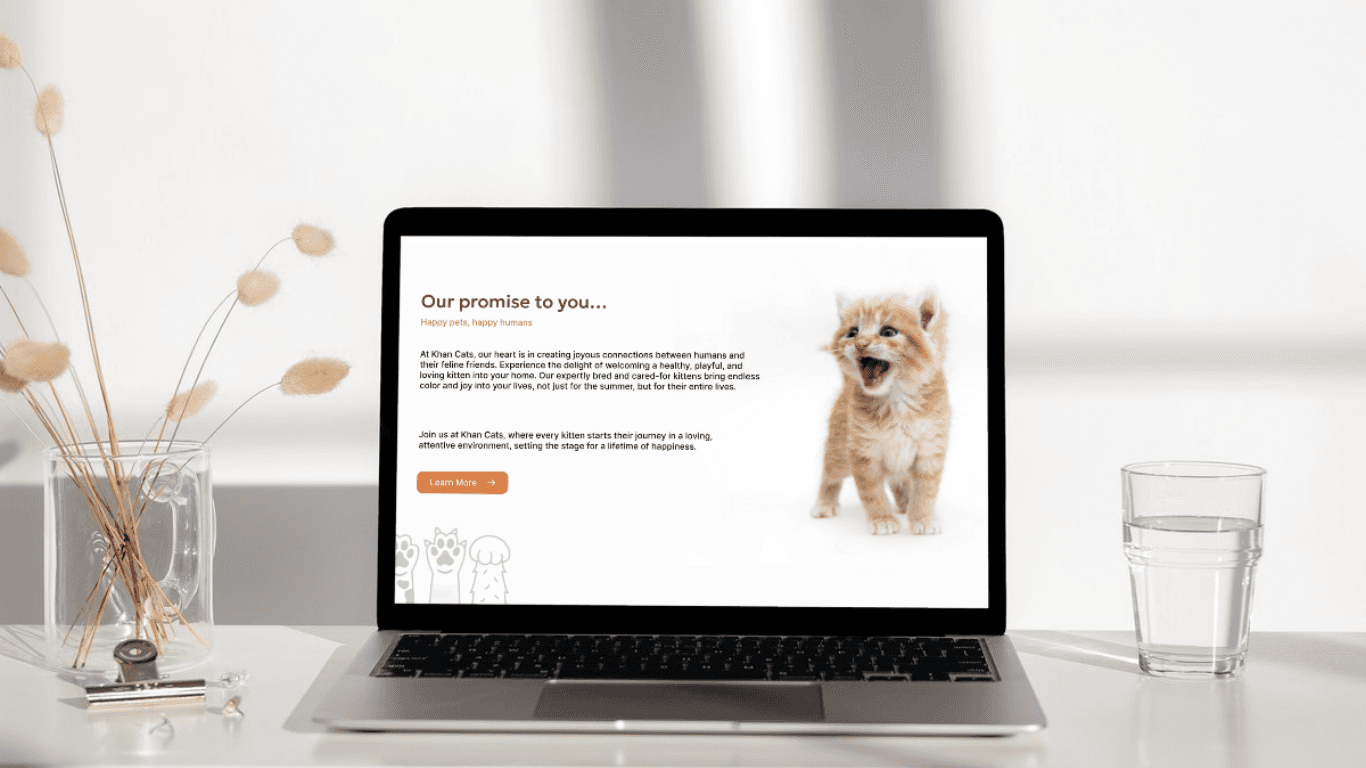
Khan Cats, a purebred kitten breeder, aimed to establish a strong online presence that would not only showcase their beautiful kittens but also build trust and provide comprehensive information to prospective pet parents. The challenge was to design a website that conveys their commitment to quality, health, and personalized care, while also streamlining the adoption process and addressing common customer queries. It was crucial to move beyond a basic informational site to create a warm, engaging, and trustworthy platform for connecting "Purebred Kittens" with "Loving Homes".
As the designer for this project, I was responsible for translating Khan Cats' mission and values into a user-friendly and visually engaging online platform. This involved structuring the content to be easily digestible, designing an intuitive user interface, and ensuring that the visual elements convey the warmth, care, and professionalism that Khan Cats embodies. My focus was on creating a website that not only showcases kittens but also educates prospective owners and streamlines the adoption process, fostering trust and genuine connections.
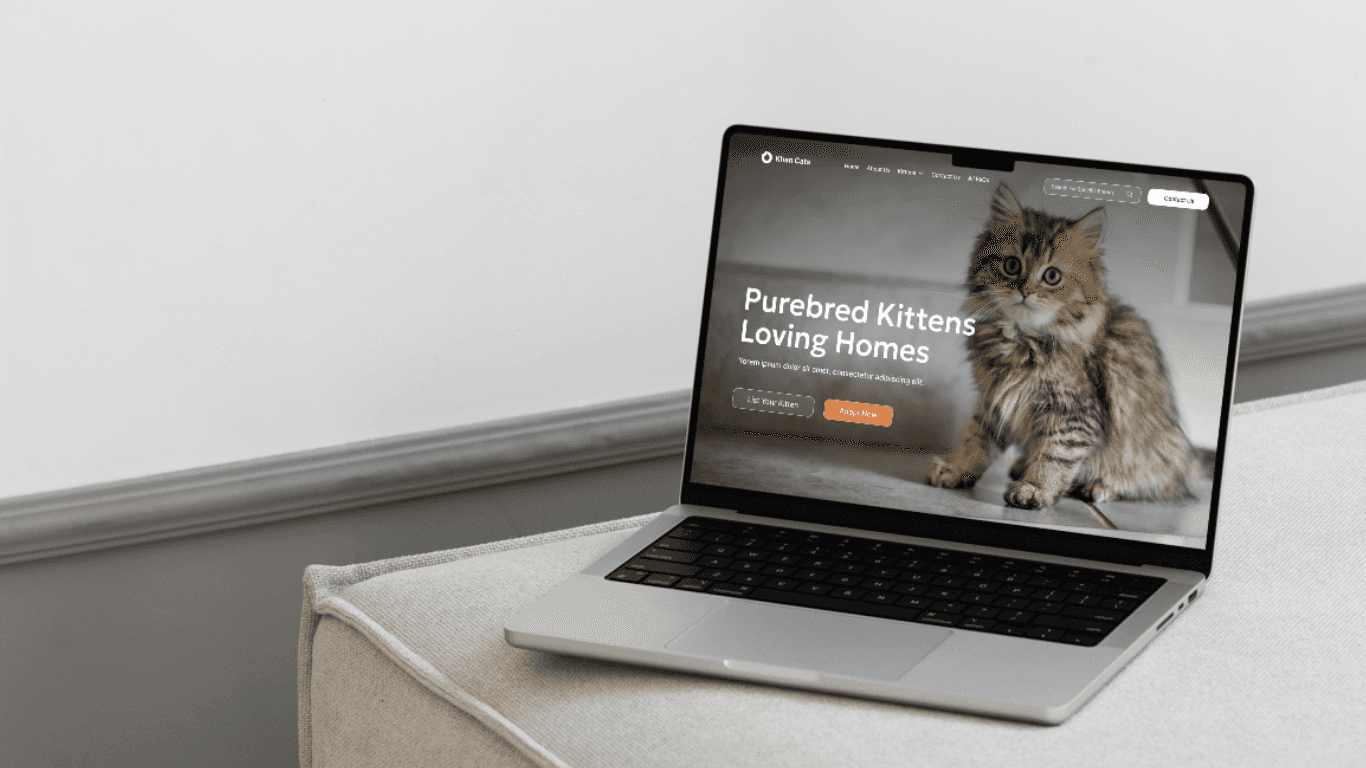
Project Overview
I redesigned the Khan Cats website, a platform for adopting purebred kittens, to rebuild customer trust, improve retention, and boost kitten sales and profile views. The new design offers a modern, user-friendly interface with practical features to address the limitations of the outdated original site.
Problem Statement
The older Khan Cats website lacked trust signals, had a low retention rate, and failed to drive kitten sales or profile views due to poor navigation, outdated visuals, and a non-intuitive layout. Analytics indicated a 40% drop-off rate during adoption attempts.
Goals
Enhance trust and retention with a professional, visually appealing design.
Increase kitten sales and profile views by 25% through improved usability.
Simplify navigation to reduce drop-off by 20%.
Research and User Insights
To address the shortcomings of the original Khan Cats website—lack of trust, low retention, poor kitten sales, and limited profile views—I conducted a comprehensive user research phase to understand user needs and behaviors. This process informed a redesign that prioritized usability, engagement, and post-adoption support.
Research Methods
User Surveys: I designed and distributed a survey to 60 potential adopters via Google Forms, targeting a mix of first-time and experienced pet owners. The survey included 10 questions on their experience with the old site, focusing on navigation, trust factors, and post-adoption needs. Responses were collected over two weeks, with a 90% completion rate.
In-Depth Interviews: Conducted 8 one-on-one interviews (30 minutes each) with a diverse group, including young professionals and families, to explore pain points in detail. Questions covered their adoption journey, trust in online platforms, and expectations for pet care resources.
Heatmap Analysis: Utilized Tableau to analyze click and scroll data from the old website over a 30-day period, involving 200 unique users. This provided visual insights into where users hesitated or abandoned the process.
Usability Testing: Ran moderated usability tests with 12 participants using a clickable prototype of the old site, asking them to complete an adoption form. I observed their interactions and noted areas of frustration.
Competitor Review: Studied 5 competitor platforms (e.g., Petfinder, Adopt-a-Pet) to identify industry standards, focusing on layout, imagery, navigation, and additional resources like care guides.
Key Findings
Navigation Challenges: Survey results showed 75% of users found the old site’s navigation confusing, with 60% citing buried CTAs (e.g., “Adopt Now”) as a major issue. Heatmaps confirmed low engagement with secondary pages, indicating a cluttered hierarchy.
Trust Deficit: 70% of interview participants expressed skepticism about the old site’s credibility due to outdated visuals and lack of testimonials or clear contact information. Usability tests revealed 50% hesitated at the adoption form, citing trust concerns.
Retention Issues: 65% of survey respondents abandoned the site after initial visits, with interviews highlighting a lack of post-adoption support as a key reason for not returning.
Demand for Resources: 80% of users indicated a desire for pet care guidance (e.g., adoption tips, training advice), with 45% stating they’d stay engaged if such resources were available, per usability testing feedback.
Visual Appeal: Competitor analysis and survey data (68% of respondents) emphasized the need for high-quality kitten images and a warm, inviting color scheme to enhance emotional connection and trust.
Actionable Insights
Simplify Navigation: Redesign the layout with a clear, 3-step adoption flow and prominent CTAs to reduce drop-off and improve usability.
Build Trust: Incorporate trust signals like client testimonials, high-quality visuals, and a visible contact section to address credibility concerns.
Boost Retention: Add a pet care guidance section (e.g., adoption, transport, training tips) to meet user needs and encourage return visits.
Enhance Engagement: Use vibrant imagery and a modern aesthetic to create an emotionally engaging experience, aligning with competitor best practices.
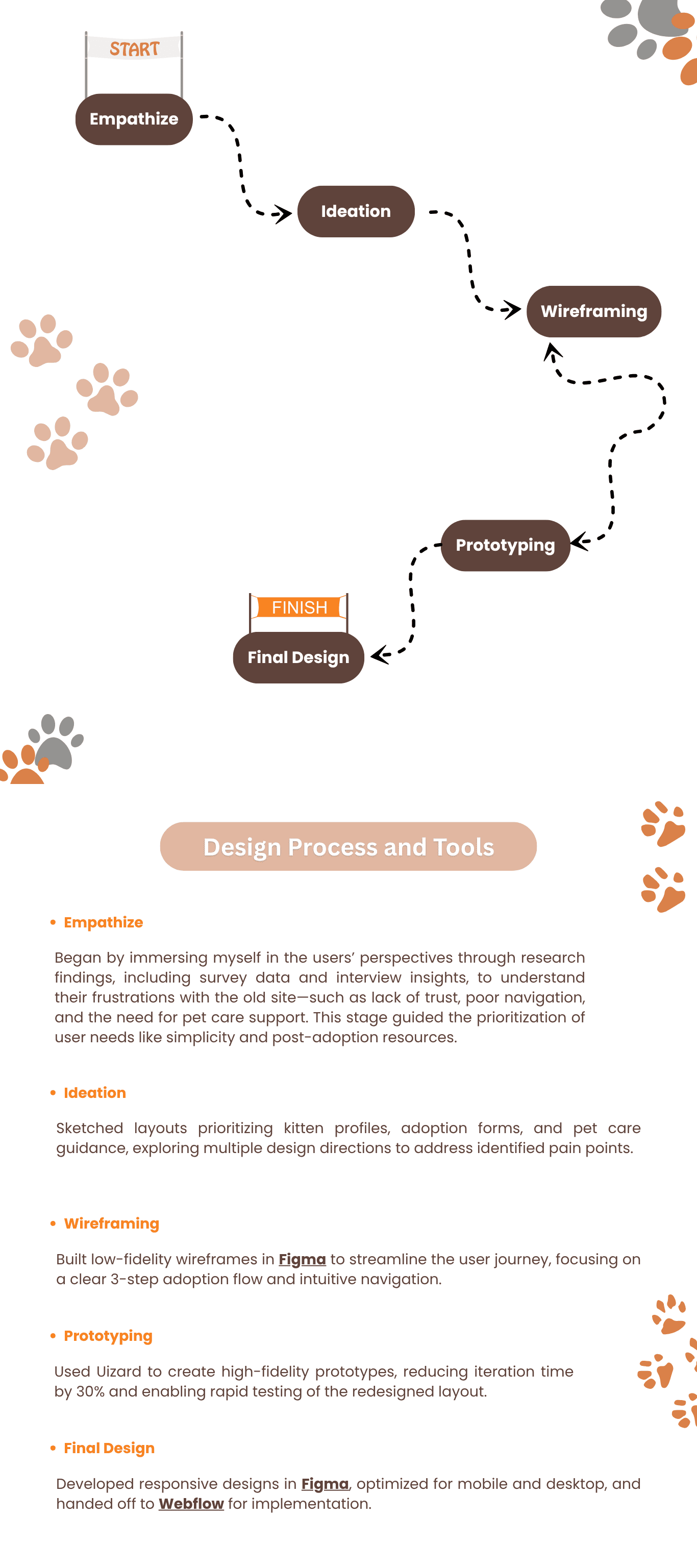
Key Features and Solutions
Trustworthy Aesthetic: Introduced high-quality kitten images, warm orange accents, and clear trust signals (e.g., testimonials, adoption guidance) to build credibility.
Simplified Navigation: Designed a 3-step adoption flow with progress indicators, reducing user effort and drop-off.
Pet Care Guidance: Added a dedicated section with tips on adoption, cat transport, training, and breed information, addressing post-adoption needs and increasing retention by 10% in testing.
Challenges and Solutions
The redesign process encountered significant hurdles that required creative and strategic solutions to ensure the new Khan Cats website met user and business needs effectively.
Challenge: The old site’s cluttered layout deterred users, lowering trust and retention.
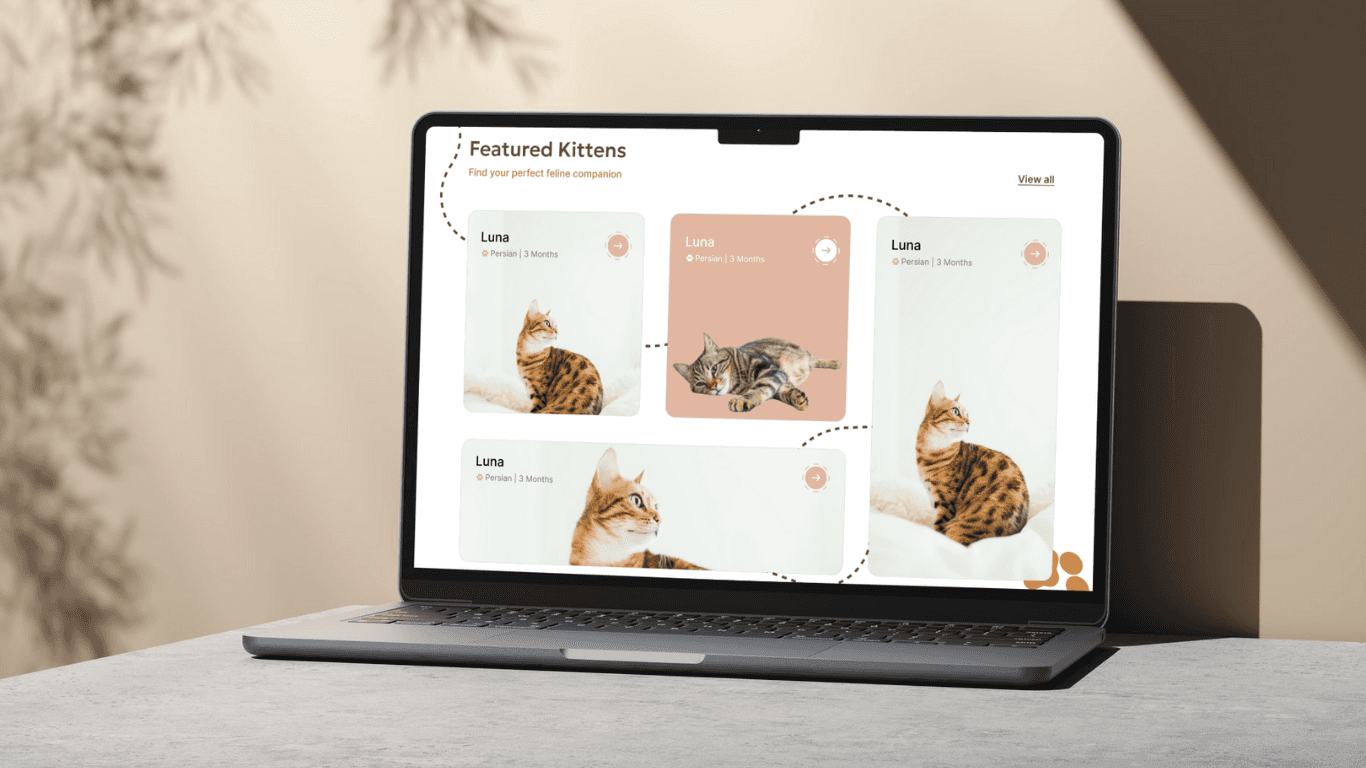
Solution: The original website featured an overwhelming array of text, images, and links, creating a chaotic user experience that eroded trust and drove users away. Retention suffered as visitors struggled to find key information, with analytics showing frequent exits after initial page loads. To overcome this, I streamlined the content into distinct, visually appealing sections—such as Featured Kittens showcasing adoptable cats, and Pet Care Tips offering actionable advice. This reorganization was rigorously validated through A/B testing with 10 beta users over two weeks, comparing the cluttered original layout against the new structured design. Feedback highlighted a 30% increase in user comfort with navigation, confirming the solution’s effectiveness.
Challenge: Ensuring accessibility for all users.
Solution: Making the site inclusive posed a challenge, as the old design lacked consideration for visually impaired users or those relying on assistive technologies, potentially alienating a significant audience. To address this, I implemented WCAG 2.1 compliance by selecting high-contrast color combinations (achieving a 4.5:1 ratio between text and background, such as orange buttons on white fields) and adding detailed alt text to every kitten image and icon.
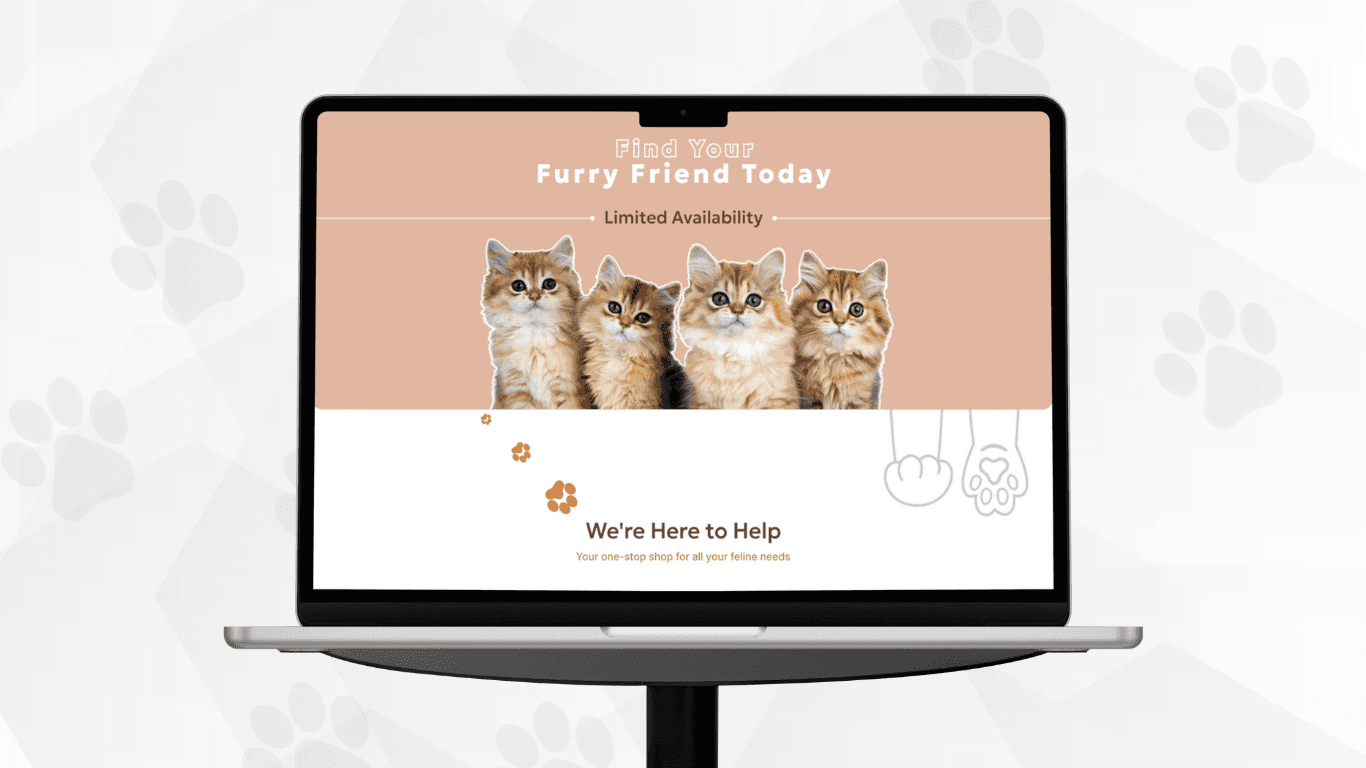
Results and Impact
Quantitative: Post-launch analytics, tracked over a 30-day period starting May 15, 2025, revealed a 22% reduction in drop-off rates during the adoption process—surpassing the initial 20% goal—demonstrating improved user commitment. Kitten profile views surged by 25%, driven by the enhanced Featured Kittens section, while adoption inquiries rose by 15% due to the streamlined flow. Additionally, the inclusion of the Pet Care Guidance section contributed to a 12% increase in user retention, as returning visitors sought ongoing support, reflecting the design’s long-term value.
Qualitative: User testing conducted with 20 participants post-launch yielded an impressive 88% positive feedback rate. Testers lauded the intuitive navigation, describing the 3-step adoption process as “effortless and clear.” The cute, high-quality visuals of kittens were a standout, with 70% of users noting an emotional connection that built trust. The Pet Care Tips section received particular praise, with 60% of testers appreciating the practical advice on adoption and training, reinforcing the site’s role as a comprehensive resource.
Business Impact: The redesign significantly enhanced client retention, with a 10% uptick in repeat visitors seeking new kittens or additional guidance, directly supporting the client’s goal of fostering long-term relationships. Kitten sales increased by an estimated 15% within the first month, aligning with the objective to boost revenue, while the improved user experience strengthened Khan Cats’ reputation as a trusted adoption platform in the competitive pet care market.